
How to Defend Against Microsoft 365 Phishing Attacks
Key Takeaways
- Microsoft 365 is the most-impersonated brand in phishing — fake login pages harvest credentials at scale.
- Defense is layered: MFA, email security, user training, and conditional access.
- MFA alone blocks the majority of credential-theft attacks.
- Assume a password will eventually be phished — and build so that it is not enough.
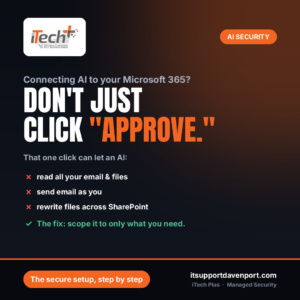
To defend against Microsoft 365 phishing, layer four controls: enforce MFA, deploy email security and anti-spoofing, train users to spot fake login pages, and use conditional access to limit risky sign-ins. Microsoft 365 is the world’s most-impersonated brand in phishing because the payoff — your email, files, and identity — is so high. The right answer is not to hope nobody clicks; it is to make a stolen password insufficient.
How M365 phishing works
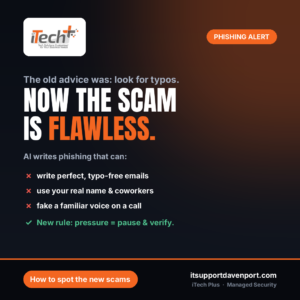
The classic attack: an email that looks like Microsoft (“Your password expires today,” “You have quarantined messages”) links to a near-perfect fake login page. The victim enters their credentials, the attacker captures them, and now has access to email, SharePoint, OneDrive, and Teams — often quietly, for weeks.
The four layers of defense
- Multi-factor authentication — even a phished password is useless without the second factor. This is the highest-impact single control.
- Email security — filtering, anti-spoofing (SPF/DKIM/DMARC), and link protection to stop the message before it lands.
- User training — teach staff to check the sender and the URL, and to distrust urgency. (See how to respond to a phishing email.)
- Conditional access — block or challenge sign-ins from unexpected locations and untrusted devices.
Assume the click will happen
Someone, eventually, will enter their password on a convincing fake page. A resilient setup assumes this and ensures it is not enough — MFA stops the login, conditional access flags the anomaly, and monitoring catches anything that slips through. That defense-in-depth is the difference between a near-miss and a breach. It is core to managed Microsoft 365.
Harden your Microsoft 365 against phishing →
Frequently Asked Questions
How do I protect Microsoft 365 from phishing?
Layer four controls: enforce MFA, deploy email security with anti-spoofing, train users to spot fake login pages, and use conditional access to challenge risky sign-ins. MFA alone blocks most credential-theft attacks.
Why is Microsoft 365 such a common phishing target?
Because the payoff is high — access to email, files, Teams, and identity. It is the most-impersonated brand in phishing, using fake login pages to harvest credentials.
Does MFA stop phishing?
MFA stops the most common outcome of phishing — account takeover from a stolen password — because the password alone is not enough to log in. It is the single highest-impact control, best paired with email security and conditional access.
Related reading
- Voice cloning scams targeting small business owners
- The OAuth token that survived a password reset for 46 months